

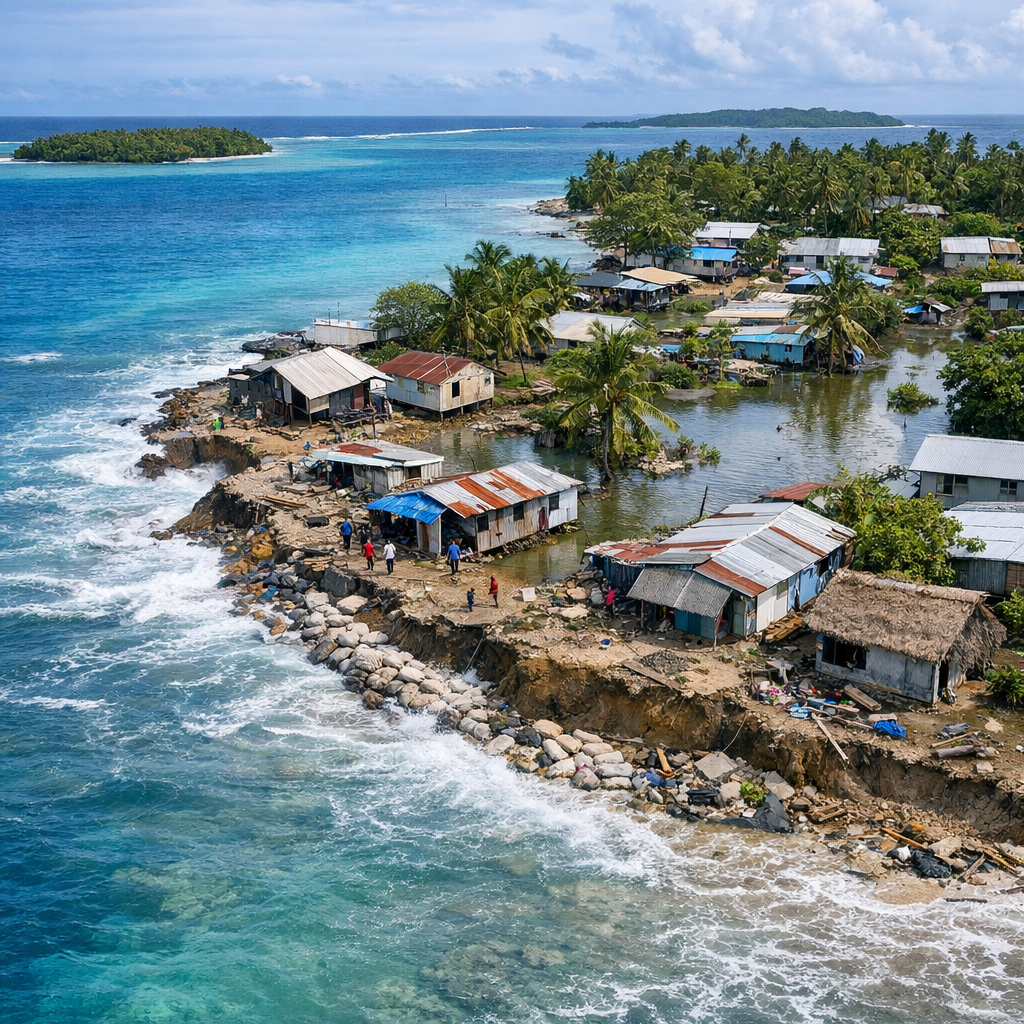
Pacific Island nations are increasingly vulnerable to the multifaceted impacts of climate change, including rising sea levels, ocean warming, and intensified storms. These environmental changes pose significant threats to the communities, economies, and ecosystems of the region.
Accelerated Sea-Level Rise
Sea levels in the western Pacific Ocean have been rising at a rate 2–3 times the global average, resulting in almost 0.3 meters of net rise since 1990. This rapid increase endangers low-lying islands, leading to coastal erosion, flooding, and the potential displacement of communities.
Ocean Warming and Acidification
Since 1980, sea surface temperatures in the South-West Pacific have risen three times faster than the global average. This warming, coupled with ocean acidification, adversely affects marine ecosystems, particularly coral reefs, which are vital for biodiversity and local fisheries.
Intensified Storms and Extreme Weather
Climate change has led to more frequent and severe cyclones and storms in the Pacific region. These extreme weather events cause significant damage to infrastructure, disrupt livelihoods, and pose risks to human safety.
Freshwater Scarcity
Rising sea levels contribute to saltwater intrusion into freshwater sources, compromising the availability of potable water. This issue is particularly acute for atoll nations with limited freshwater resources.
Adaptation and Resilience Efforts
Pacific Island communities are actively working to adapt to these challenges through various initiatives, including the development of early warning systems, sustainable resource management, and infrastructure improvements. International support and collaboration remain crucial in enhancing the resilience of these vulnerable nations.