

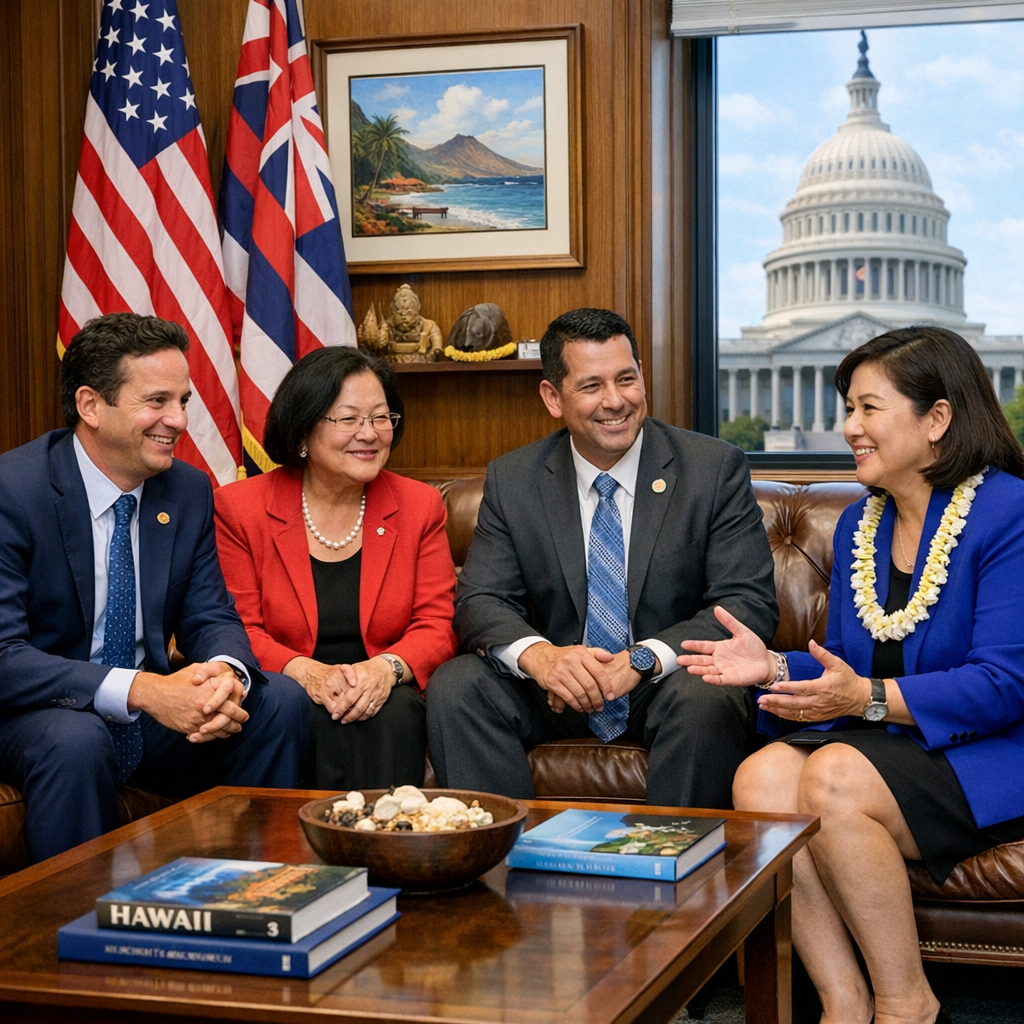
Hawaii, though geographically distant from the continental United States, plays a significant role in national politics and the economy. Understanding this influence provides insight into how our state contributes to and is affected by broader national dynamics.
Political Representation
Hawaii is represented in the U.S. Congress by two senators and two representatives, all of whom are members of the Democratic Party. As of 2026, our congressional delegation includes:
- Senator Brian Schatz
- Senator Mazie Hirono
- Representative Ed Case (1st Congressional District)
- Representative Jill Tokuda (2nd Congressional District)
These elected officials advocate for Hawaii’s interests at the federal level, addressing issues ranging from military presence to economic development and environmental conservation.
Economic Contributions
Hawaii’s economy is multifaceted, with several key sectors contributing to both the state and national economy:
Tourism
Tourism remains a cornerstone of Hawaii’s economy, attracting millions of visitors annually. This sector generates significant revenue and provides employment opportunities for residents.
Defense
The U.S. Department of Defense maintains a substantial presence in Hawaii, with annual defense spending bringing approximately $7.9 billion to the state. This accounts for about 8.3% of Hawaii’s GDP and supports over 20,000 civilian jobs and 31,000 contractor positions. The strategic location of Hawaii in the Pacific makes it a pivotal point for military operations and defense initiatives.
Renewable Energy
Hawaii is making strides in renewable energy, with about 34% of the state’s total electricity generation coming from renewable sources as of 2025. The islands of Kauai, Hawaii, and Maui are mandated to achieve 100% renewable electricity by 2035. This commitment positions Hawaii as a leader in sustainable energy practices, contributing to national goals for reducing carbon emissions.
Trade
International trade is vital to Hawaii’s economy, with exports totaling approximately $4.1 billion annually. Key trading partners include Canada, Mexico, the United Kingdom, Japan, and Australia. Agricultural products such as coffee, macadamia nuts, and pineapples are among the state’s primary exports, showcasing Hawaii’s unique offerings to the global market.
Challenges and Opportunities
Despite these contributions, Hawaii faces challenges such as high energy costs, reliance on imported goods, and the need for economic diversification. However, initiatives in technology, education, and sustainable practices present opportunities for growth and resilience.
In conclusion, Hawaii’s role in national politics and the economy is both significant and evolving. By leveraging our unique position and resources, we can continue to contribute meaningfully to the broader national landscape while addressing local challenges and opportunities.