

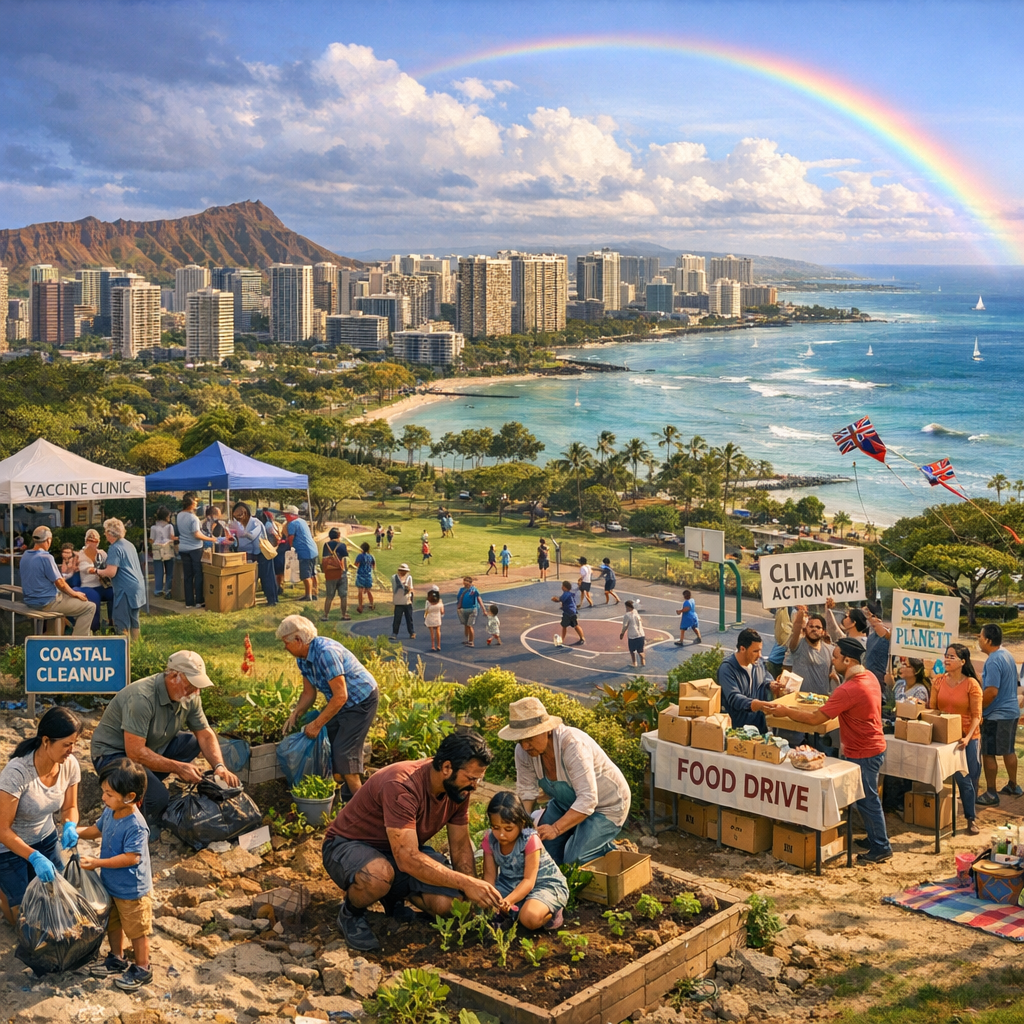
As an island state, Hawaiʻi is uniquely positioned at the crossroads of global events, with international developments often having direct and profound effects on our local economy, environment, and community resilience.
Economic Impacts of Global Trade Policies
Recent shifts in U.S. trade policies have had tangible effects on Hawaiʻi’s economy. The University of Hawaiʻi Economic Research Organization (UHERO) reported a decline in visitor numbers and a stagnation in job growth, attributing these trends to international trade tensions and resulting tariffs. This economic downturn underscores the interconnectedness of Hawaiʻi’s tourism-dependent economy with global market dynamics.
Environmental Challenges from Climate Change
Climate change, a global crisis, has manifested locally in Hawaiʻi through increased frequency and intensity of natural disasters. In March 2026, a Kona Low system caused historic flooding across all Hawaiian Islands, leading to significant infrastructure damage and economic losses. This event highlights the urgent need for climate resilience strategies tailored to our unique island environment.
Community Resilience Amidst Global Crises
Despite these challenges, Hawaiʻi’s communities have demonstrated remarkable resilience. Following the devastating Lahaina fires, local organizations have called for Indigenous-led recovery efforts, emphasizing the importance of self-determination and cultural preservation in rebuilding processes. This approach aligns with global movements advocating for Indigenous rights and sustainable development.
Looking Ahead
As global events continue to influence our islands, it is imperative for Hawaiʻi to engage proactively with international developments. By fostering economic diversification, investing in climate adaptation, and empowering local communities, we can navigate the complexities of a globalized world while preserving the unique cultural and environmental heritage of our islands.