

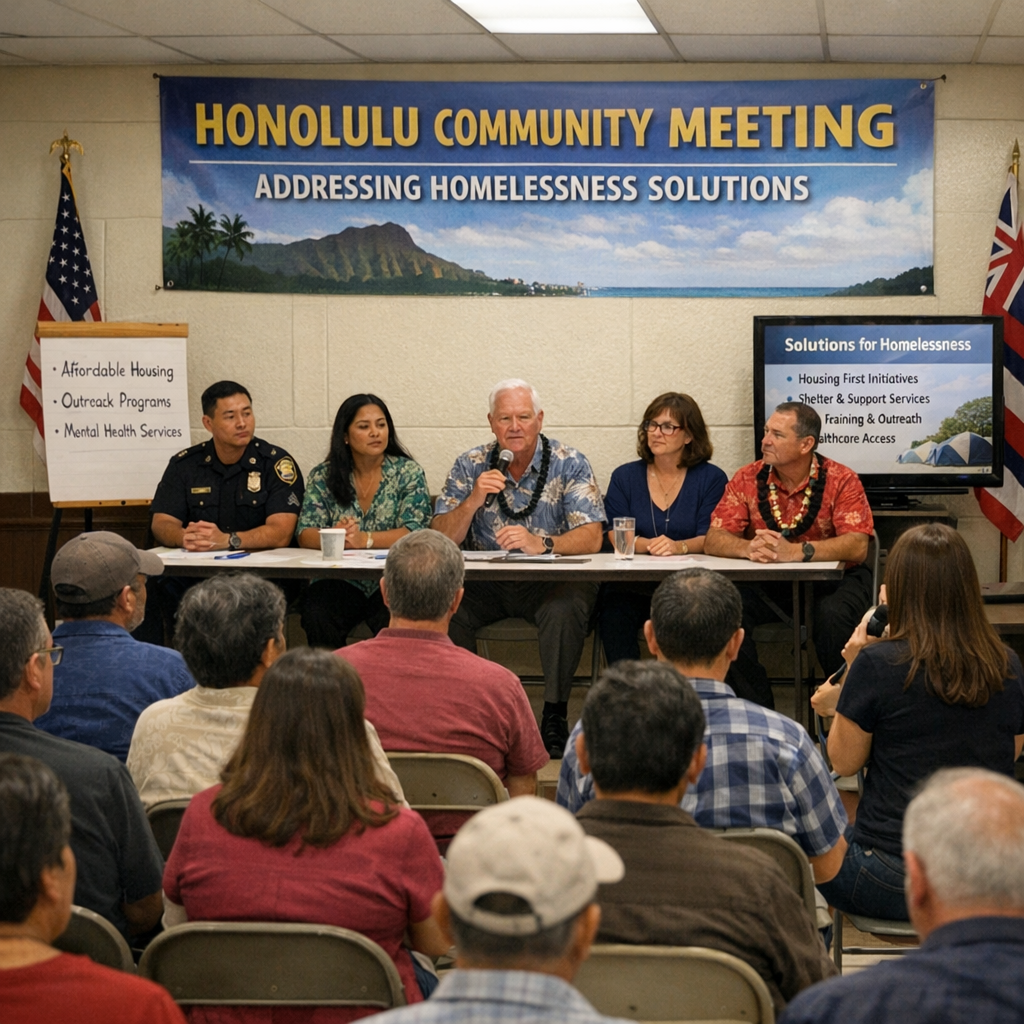
Homelessness remains a pressing issue in Honolulu, with various neighborhoods experiencing its impacts. Recent data indicates that over 4,000 individuals are experiencing homelessness on Oʻahu, either in shelters or living on the streets at any given time. Areas such as Aʻala Park have been identified as consistent hotspots, raising safety concerns among residents. Incidents like property damage and public disturbances have heightened fears, leading some community members to limit their activities, especially after dark.
City officials have been implementing measures to address these concerns. Efforts to revitalize areas like Chinatown include increased police presence, additional security cameras, expanded sidewalk cleaning, and new housing options. The mayor’s proposed budget also allocates funds for physical improvements and additional staffing to expedite the processing of criminal cases related to homelessness.
Community-driven initiatives have also emerged as effective models. For instance, Puʻuhonua o Waiʻanae, a self-organized homeless community near Waiʻanae Boat Harbor, has transitioned to a private plot of agricultural land. This move aims to establish a permanent village featuring tiny homes, running water, electricity, farming, and communal facilities. Such initiatives highlight the potential of community-led solutions in providing safe environments for those experiencing homelessness.
Residents are encouraged to report city issues, including concerns related to homelessness, through platforms like HNL 311. This official mobile application allows individuals to report various issues, from infrastructure problems to public safety concerns, thereby facilitating community participation in addressing local challenges.
While these efforts represent progress, the complexity of homelessness requires ongoing collaboration between city officials, community organizations, and residents. Continued investment in both immediate interventions and long-term solutions is essential to effectively address the multifaceted nature of homelessness in Honolulu.